
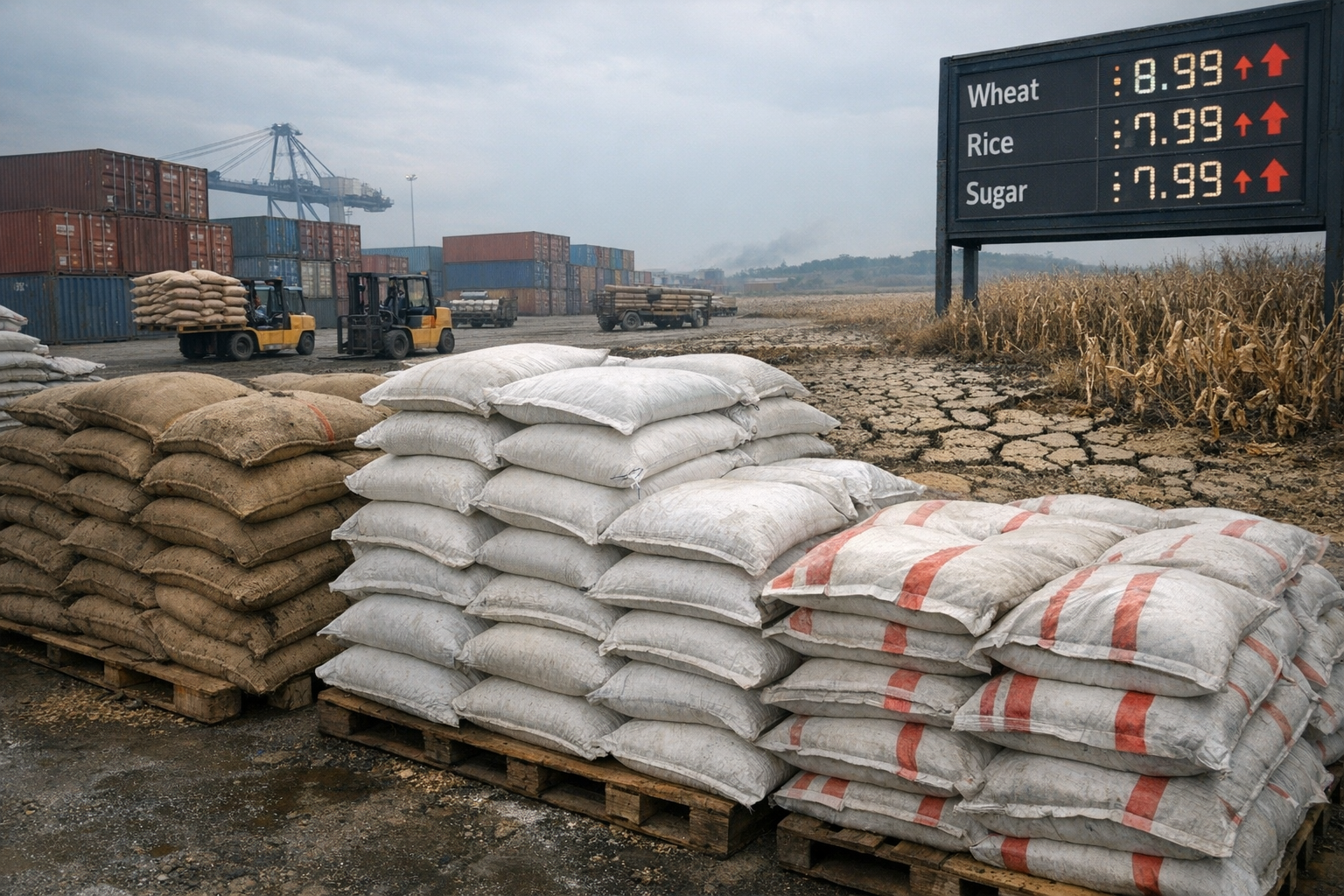
Fears that a powerful El Niño weather pattern could once again jolt global food markets are resurfacing, just as food prices begin climbing anew and conflicts in key regions add fresh strain to already fragile supply chains.
But for now, the world is not in the grip of a “super El Niño.” The latest assessments from the World Meteorological Organization indicate that weak La Niña conditions that lingered into early 2026 are fading, with neutral conditions in the Pacific considered the most likely through the middle of the year. The odds of El Niño developing later in 2026 increase modestly, forecasters say, but remain far from certain.
That distinction matters. Markets, aid agencies and governments have fresh reason to worry about weather disruptions, but the current threat to food costs is more complicated than a single climate event. A mix of drought risk, higher energy prices, fertilizer costs and geopolitical instability is already pushing prices upward.
The United Nations Food and Agriculture Organization said its Food Price Index rose for a second consecutive month in March, driven in part by higher wheat and sugar prices. The agency pointed to deteriorating wheat crop prospects in some drought-affected areas as well as broader pressure from energy and input costs.
Those increases are reviving a familiar anxiety: that climate shocks can quickly feed inflation and deepen hunger, especially when the global food system is already under stress. The World Food Program has warned that if instability in the Middle East persists, acute hunger could reach record levels in 2026, with higher oil and transport costs making food less affordable for vulnerable populations.
Weather remains central to that outlook, even if the most dramatic forecasts have not materialized. El Niño, the warming of surface waters in the central and eastern tropical Pacific, can alter rainfall and temperature patterns across major agricultural regions, often reducing harvests in some exporters while improving conditions in others. Strong episodes have historically been associated with meaningful rises in global food commodity prices, often with a delay as lower yields work through inventories and trade flows.
That dynamic was at the center of global concern in 2023, when forecasters warned that the developing 2023-24 El Niño could become exceptionally strong. At the time, food markets were still reeling from the effects of Russia’s invasion of Ukraine, which disrupted grain and fertilizer exports, and from a wave of export restrictions imposed by countries seeking to protect domestic supplies. The fear was that a severe weather shock layered on top of war would send staples such as rice, wheat, sugar and vegetable oils sharply higher.
The logic behind those fears has not disappeared. What has changed is the immediate meteorological picture. Rather than moving into a confirmed powerful El Niño now, the climate system is emerging from La Niña, and forecasters say this time of year is especially difficult to predict because of the so-called spring predictability barrier, which reduces confidence in longer-range ENSO forecasts.
That leaves governments and traders navigating several unknowns at once: whether neutral conditions give way to El Niño later this year; whether any shift becomes strong enough to damage harvests in major exporting countries; and whether conflict-related disruptions to fuel, shipping and fertilizer markets prove more important for food inflation than the Pacific weather cycle itself.
For poorer food-importing countries, the distinction may offer little comfort. Even absent a confirmed super El Niño, the overlap of climate volatility, conflict and economic weakness is enough to keep food insecurity elevated. A drought in one breadbasket, higher fuel costs on shipping routes, or new fertilizer shortages can each ripple rapidly through global markets.
The renewed focus on El Niño, then, is less a sign that a worst-case scenario has arrived than a reminder of how exposed the world remains. Food inflation is rising again. Hunger remains severe in many regions. And with weather forecasts still uncertain, policymakers are confronting a familiar problem: how to prepare for a climate shock that has not yet happened, while managing the geopolitical and economic shocks that already have.