
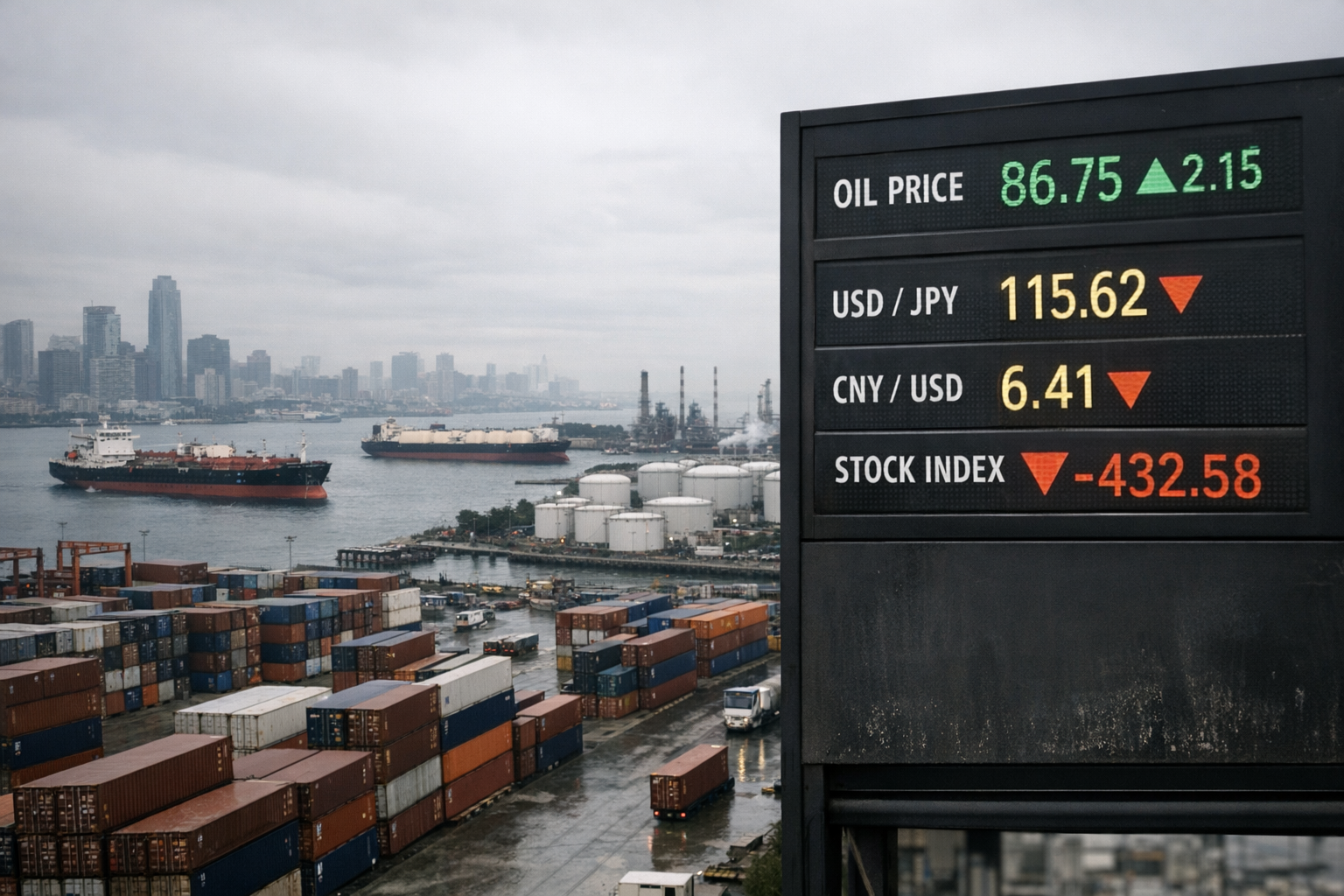
The month-long disruption in the Strait of Hormuz has jolted Asian economies with a familiar mix of pain: surging energy import bills, weakening currencies and rising pressure on central banks already struggling to balance inflation against slowing growth.
For some investors and policymakers, the shock has stirred uneasy memories of the Asian financial crisis of 1997 and 1998, when collapsing currencies, dwindling foreign reserves and corporate debt burdens cascaded across the region. But while the latest turmoil has exposed Asia’s continuing vulnerability to an energy shock centered in the Gulf, economists and international agencies say the conditions that turned the late-1990s upheaval into a full-blown regional financial crisis are, for now, not in place.
The reason begins with geography. The Strait of Hormuz, a narrow shipping lane between Iran and Oman, carries roughly a fifth of the world’s oil supply and a substantial share of global liquefied natural gas trade. Most of the crude and gas that passes through it is destined for Asian buyers, leaving the region especially exposed when tanker traffic is disrupted.
That vulnerability was laid bare after the waterway’s partial shutdown sharply reduced Gulf oil and LNG flows, sending energy prices soaring and rattling financial markets. In March, the International Energy Agency announced a record emergency release of stockpiles to calm markets and ease supply shortages. Oil prices later retreated from their peaks on news of a tentative two-week ceasefire between the United States and Iran, but by Wednesday the truce appeared fragile, Hormuz was still only partially functioning, and volatility had returned.
The economic strain has spread quickly beyond fuel costs. Higher oil and gas prices have inflated import bills across much of Asia, worsening trade balances for countries that rely heavily on imported energy. At the same time, a stronger dollar and investor caution have pressured regional currencies, making those imports even more expensive in local terms. Higher global borrowing costs have added a third layer of stress, especially for developing economies with tighter fiscal constraints.
The result is a difficult policy bind. Central banks that might otherwise cut interest rates to support growth are instead being forced to consider defending their currencies and containing imported inflation. Governments, meanwhile, face renewed demands for fuel subsidies and household relief at a moment when many already have less room to spend.
The hit is not uniform across the region. Import-dependent economies including India, the Philippines, Thailand, Singapore, Taiwan, Japan and South Korea are among the most vulnerable to prolonged disruption. China, while hardly immune, is seen as somewhat better positioned because of more diversified energy supply routes and larger financial buffers.
Yet even with those pressures mounting, the comparison with 1997 has limits. Then, many Asian economies had fixed or tightly managed exchange rates, thinner foreign-exchange reserves, weaker banking systems and heavy short-term foreign-currency borrowing that became unmanageable when local currencies collapsed. Those vulnerabilities helped transform an external shock into a self-reinforcing financial panic.
Today, many countries in the region have more flexible exchange rates that can absorb part of the shock, larger reserve cushions to manage disorderly currency moves, and banking sectors that are generally better capitalized and more closely regulated. Short-term foreign-currency mismatches, once a critical fault line, are also less severe in many major economies than they were three decades ago.
That does not mean the danger is trivial. The United Nations Conference on Trade and Development warned this month that the Hormuz disruption was already reverberating through trade, prices and finance, with developing economies particularly exposed. If the strait remains only partly open, elevated energy prices could keep inflation sticky, weaken consumer demand and strain public finances. A prolonged period of market stress could also test countries with large external financing needs or political reluctance to allow currencies to adjust.
What happens next may depend less on whether the region is reliving 1997 than on how long the current disruption lasts. If the ceasefire holds and tanker traffic gradually normalizes, the shock could remain painful but manageable, more a growth and inflation setback than a systemic crisis. If fighting resumes and flows through Hormuz stay constrained, the pressure on currencies, trade balances and credit conditions would intensify.
For now, Asia appears better defended than it was a generation ago. But the episode is a reminder that even stronger balance sheets cannot fully insulate the world’s most energy-import dependent economies from a choke point half a world away.