
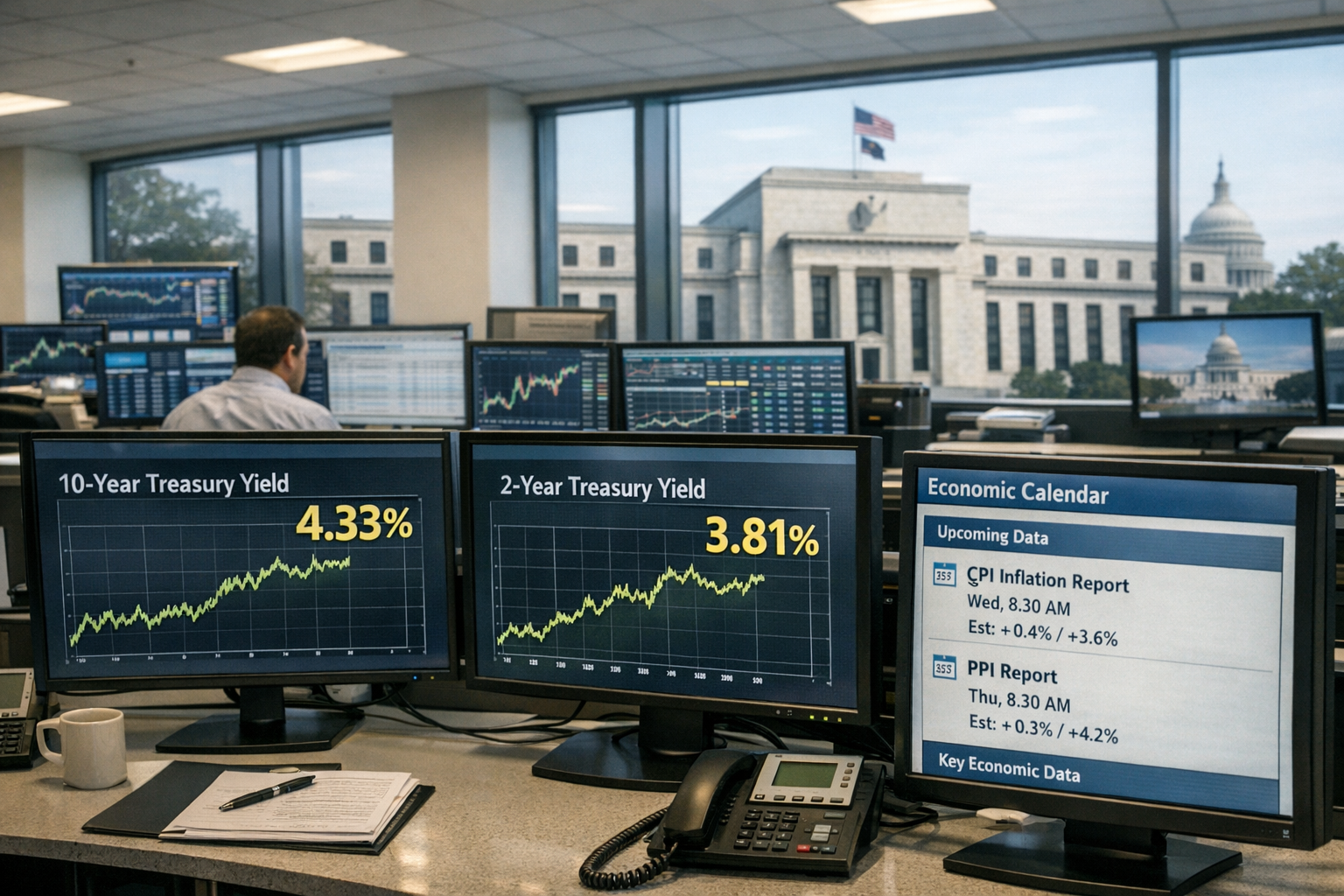
U.S. Treasury yields were little changed early Thursday as investors waited for a fresh round of inflation data that could help determine whether the Federal Reserve is still on track to lower interest rates later this year.
The benchmark 10-year Treasury yield, a key barometer for borrowing costs across the economy, has held at 4.33 percent in recent sessions, while the 2-year yield, which is more sensitive to expectations for Fed policy, stood at 3.81 percent. The muted moves reflected a market in pause, with traders looking ahead to the March consumer price index report due Friday and the producer price index report set for Tuesday.
The coming reports arrive at a delicate moment for financial markets and policymakers alike. After months of cooling inflation, investors are trying to gauge whether price pressures are continuing to ease or proving stubborn enough to keep the Fed cautious. That uncertainty has helped keep longer-term yields relatively elevated, even as expectations for eventual rate cuts remain in place.
At its March 17-18 meeting, the Fed left its benchmark federal funds rate unchanged in a range of 3.5 percent to 3.75 percent. Officials’ latest projections suggested they still see inflation staying above the central bank’s 2 percent target for some time, with median estimates putting the Fed’s preferred inflation gauge, personal consumption expenditures prices, at 2.7 percent in 2026. Policymakers also projected the year-end 2026 policy rate at 3.4 percent, a signal that any easing cycle is likely to be gradual.
Recent inflation readings have offered a mixed picture. In February, consumer prices rose 0.3 percent from the previous month and 2.4 percent from a year earlier, while core CPI, which excludes volatile food and energy categories, increased 2.5 percent on an annual basis. But wholesale inflation was firmer: final-demand producer prices climbed 0.7 percent in February and were up 3.4 percent from a year earlier, the strongest 12-month increase since February 2025.
That divergence has made the next set of data especially important. A softer March CPI reading would bolster the view that disinflation remains intact and could strengthen the case for rate cuts in the second half of the year. A hotter report, particularly if followed by another firm producer-price reading, could reinforce concerns that inflation is settling above the Fed’s goal and delay hopes for easier policy.
The timing also matters. With the Fed’s next policy meeting scheduled for April 28-29, the CPI and PPI reports will be among the most important pieces of data officials review before deciding whether the economy is cooling enough to justify a shift in stance. For now, the relative calm in the Treasury market suggests investors are reluctant to make large bets before the numbers arrive.